The same plate but different-sized prints?
How does one etching plate produce different-sized prints? A Budzinski ex libris from 1916 and a question that may interest print-makers.
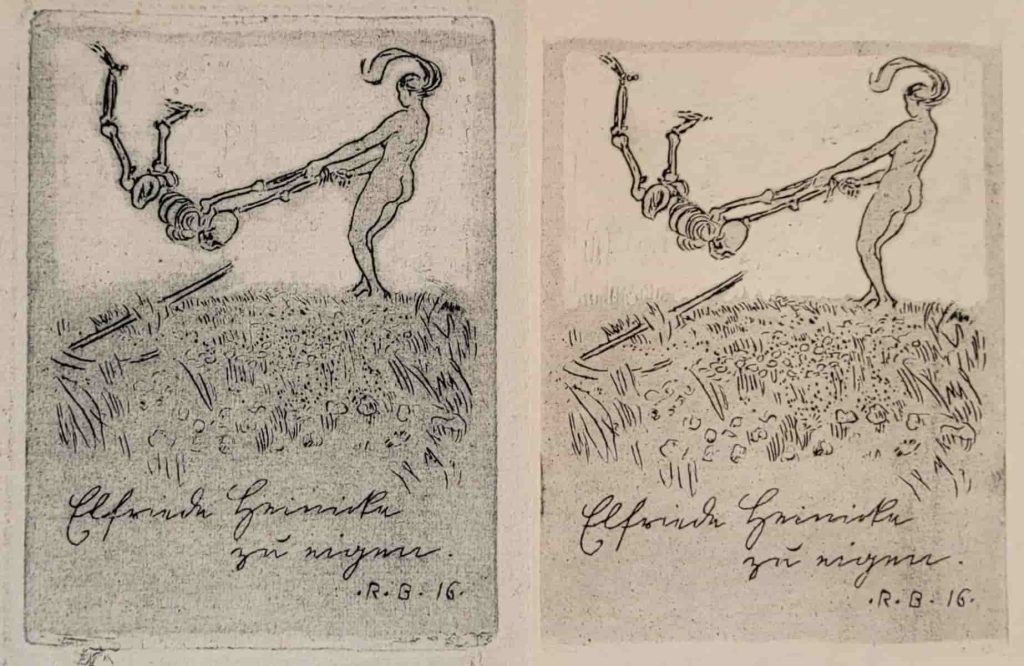
on the right of Robert Budzinski’s exlibris
for Elfriede Grimith.
The size difference between these two is not great. From top to bottom, there is no difference, but across the width, there is a millimetre or so difference.
BTW – to see other examples of Robert Budzinski‘s images of Death being defeated by a Maiden, click on this link.
Measurement considerations
First off – measurements were not taken from the plate size. It is always possible that an artist might cut down the edges of a plate. Only internal dimensions were measured. For example, measuring the distance from the woman’s ear to another point in the image.
Also ignored are any effects from wear or inking of the plate. Wear could make a line appear shorter. For example, where the end of the line was faint to begin with, wear causes it to become even shorter.
Extraneous differences
The etching process left a lot of plate tone. The artist presumably burnished it away in the areas surrounding the Maiden and the skeleton.
Also the print on the right must have been done at a later date. The plate tone appears to have been burnished out in more areas. For example: around the Maiden’s body, between her arms, above the grass, etc.
One explanation
Etchings are printed on damp paper. Because different paper stocks swell and shrink at different rates, prints pulled from the same plate can end up with slightly different dimensions after the print dries. Additionally, feeding paper through the press in different directions—such as printing one impression with the plate in portrait orientation and another later in landscape orientation—causes the press to stretch the fibres differently each time.
Any other thoughts?
Send to wn at wordlessnovels.com