Warja Lavater was the 1st artist to create a modernist book, William Tell, with a wordless narrative using pictograms or symbols instead of words or conventional pictures.
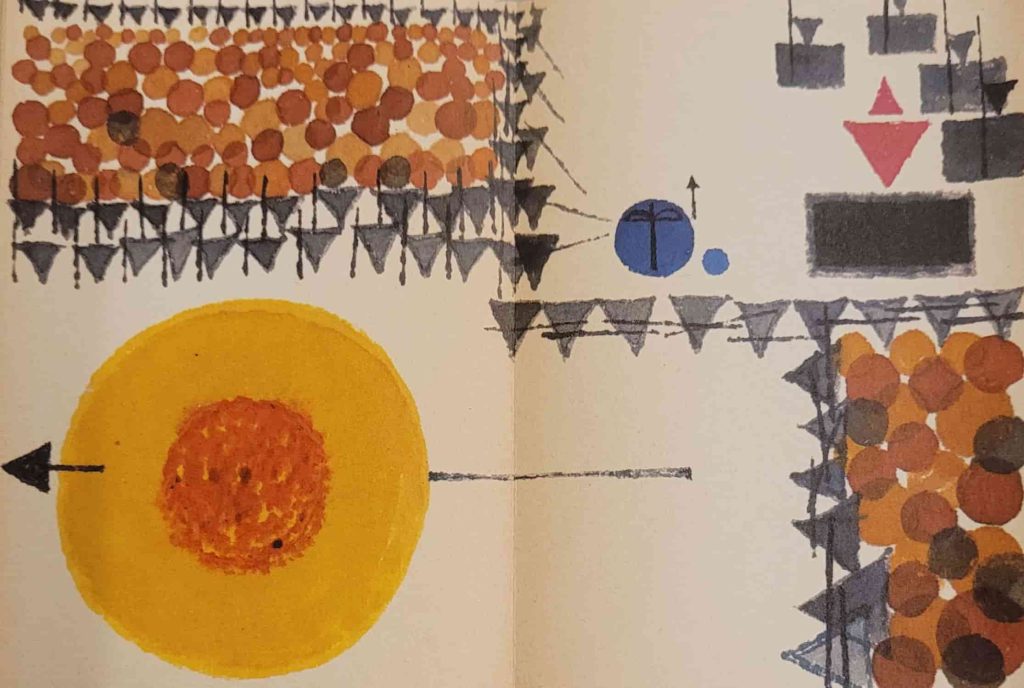
narrative, William Tell, which uses symbols
or pictograms to tell the story.
Truly wordless.
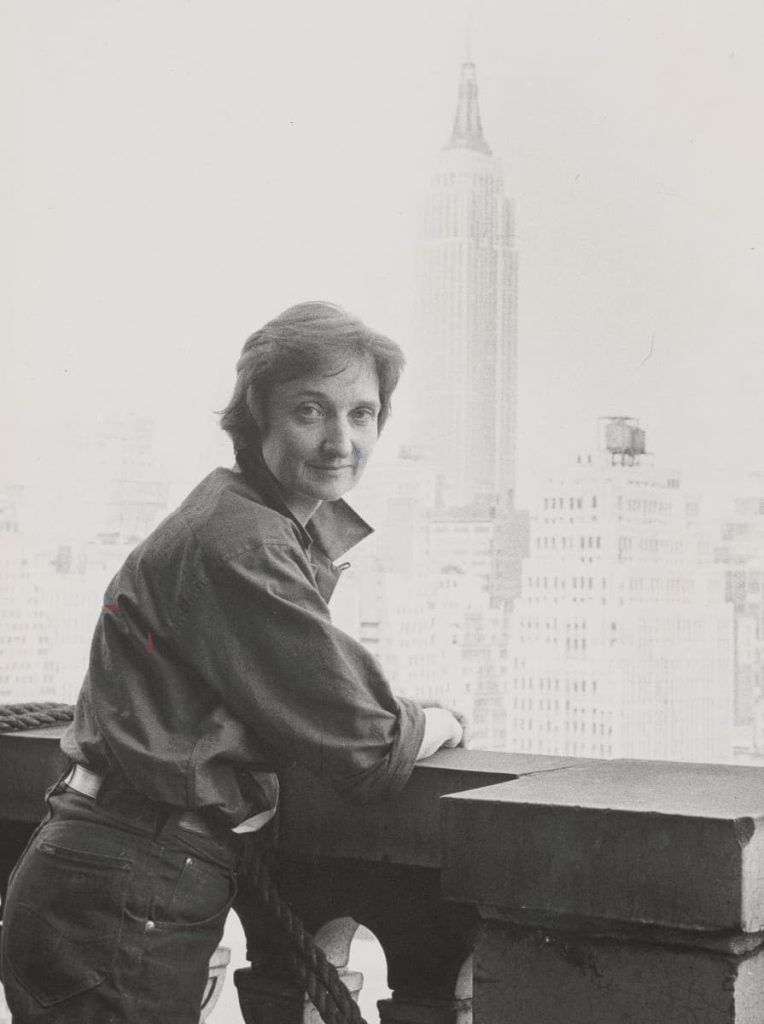
Warja Honegger-Lavater, 1913 – 2007 (she appears to have used Warja Lavater for most of her life), was born in Switzerland. She opened a studio in Zurich in 1937 with her future husband and was initially known as a designer of symbols, logos, and trademarks. In 1958, she relocated to New York, where she worked as an illustrator.
In 1962, the New York City Museum of Modern Art published her William Tell, the story of the Swiss hero and his son. Lavater tells the story chronologically, using symbols without words. This work is arguably the first modernist book and certainly the first wordless book to use only symbols. In the following years, Lavater had a number of other wordless folding books (18?) published using only symbols.
Publication history
- William Tell was published in 1962 by The Junior Council, The Museum of Modern Art, New York, and printer, Basilus Presse, Basel.
- Second edition (5th-8th thousand) in 1966 by the same institutions.
- and in1991 as Guillaume Tell = Wilhelm Tell = William Tell
- Heuwinkel, CH-1227 Carouge/Geneva and Neu-Allschwil/Basel. ISBN 3-9063-21-9
- 701 numbered copies, from 01-701, were printed to commemorate the 700th anniversary of the Swiss Confederation, along with 36 copies of a deluxe edition, numbered from I-XXXVI and signed by the artist.
Details of the 1962 production
- Title: William Tell (for 2000 English copies) Wilhelm Tell (for 2000 German copies)
- Author: folk legend
- Illustrator: Warja Honegger-Lavater
- Introduction: none
- Date of publication: 1962
- ISBN: not applicable
- Publisher: The Junior Council, The Museum of Modern Art, New York
- Place of publication: New York
- Printer: Basilus Presse, Basel
- Copyright: Artist?
- Dimensions:
- Slipcase: 5”x 3 5/8” (12.7x 9.1 cm)
- Book: 4.75″ x 3.5″ (12.1 x 8.9 cm)
- unfolded, stretched out (including the covers): 12cm x 211cm (83″L)
- Dust jacket: No
- slipcase: yes, blue card
- Binding: leporello (accordion) style
- Boards: paper covered
- Language: English (or German) titles, etc
- Paginated: unpaginated
- Printed: one side NOTE: there was a photo of a German copy with heavy black images on the reverse side – there is no information as to whether these were markings by an owner or some variant.
- Edition: 4050 copies
- 2000 in English
- 2000 in German
- 50 copies for the artist, signed by her, of which:
- 33 copies are numbered 1-33
- 17 copies, not for sale, are lettered a-r.
- Lithographic reproduction
- Description: comprised of 2 hard covers: 4.75” x 3.5″ (12.1 x 8.9 cm), plus 22 panels (each 12.0 x 8.8 cm) being:
- 1 panel with publication, copyright information, etc
- 1 panel for the legend
- 20 panels for the story
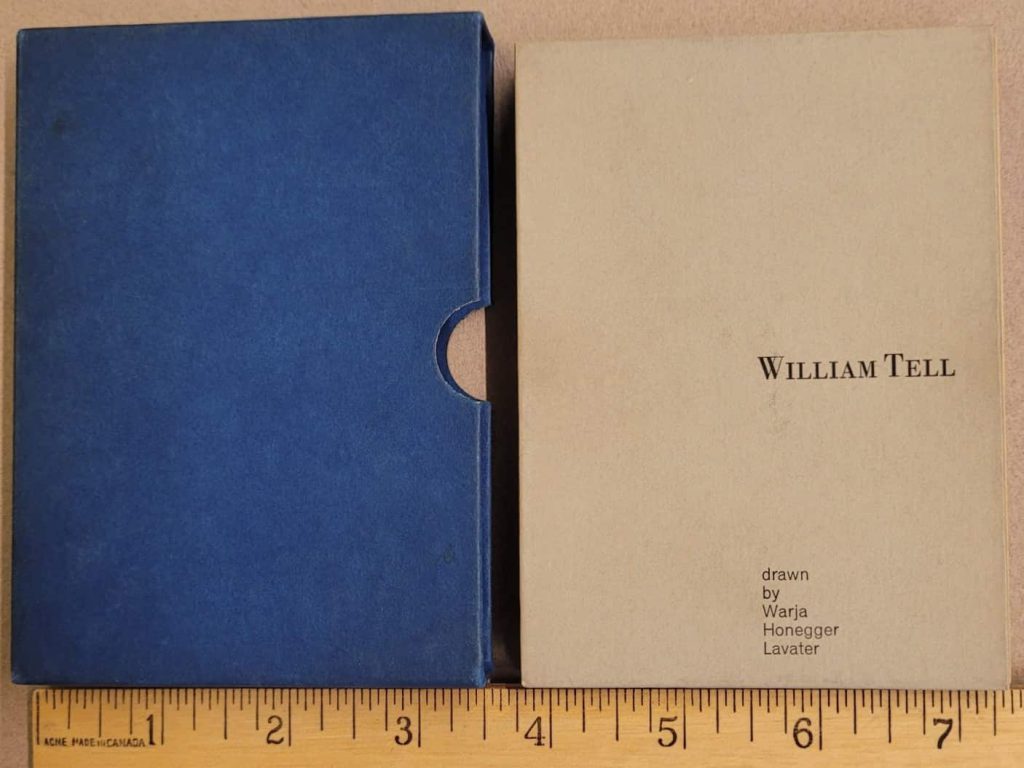
wordless story, William Tell.
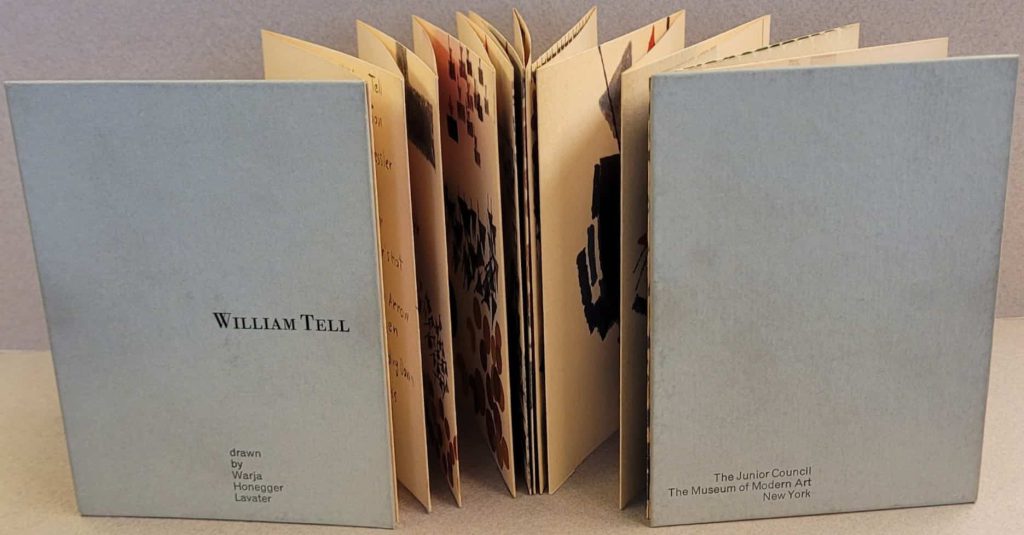
Lataver’s wordless novel, William Tell.
A folding book is typically a long sheet of paper folded in alternating pleats and is also known as a concertina, accordion, or leporello.

showing all 22 panels and the two
covers stretched out.
Symbols in the legend
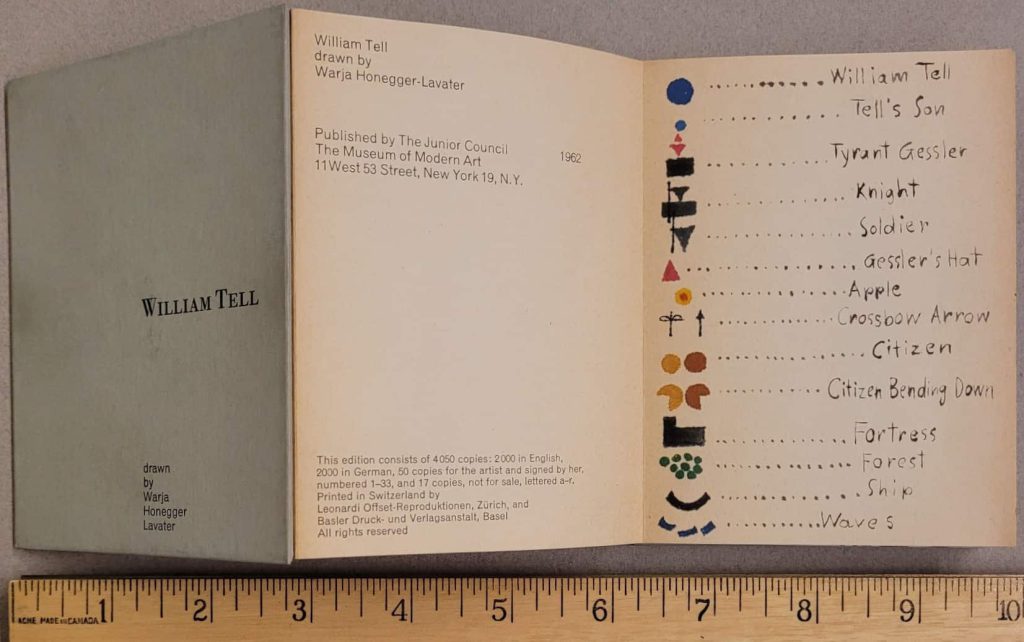
the first panel with the legend identifying the various symbols
used by Warja Honegger-Lataver in her
wordless story, William Tell.
The legend sets out 15 symbols:
- 7 for the characters: William Tell, Tell’s son, Tyrant Gessler, Knight, Soldier, Citizen, and Citizen bending down,
- 4 objects: Gessler’s hat, apple, crossbow, and arrow,
- 4 for the surroundings: Fortress, Forest, Ship, and Waves.