Lynd Ward’s wordless novel, Wild Pilgrimage, tells the story of a man who, finding himself born into a drab industrial world, is conscious of a great difference between his immediate surroundings and the world his mind creates. The protagonist attempts to bring these worlds together.
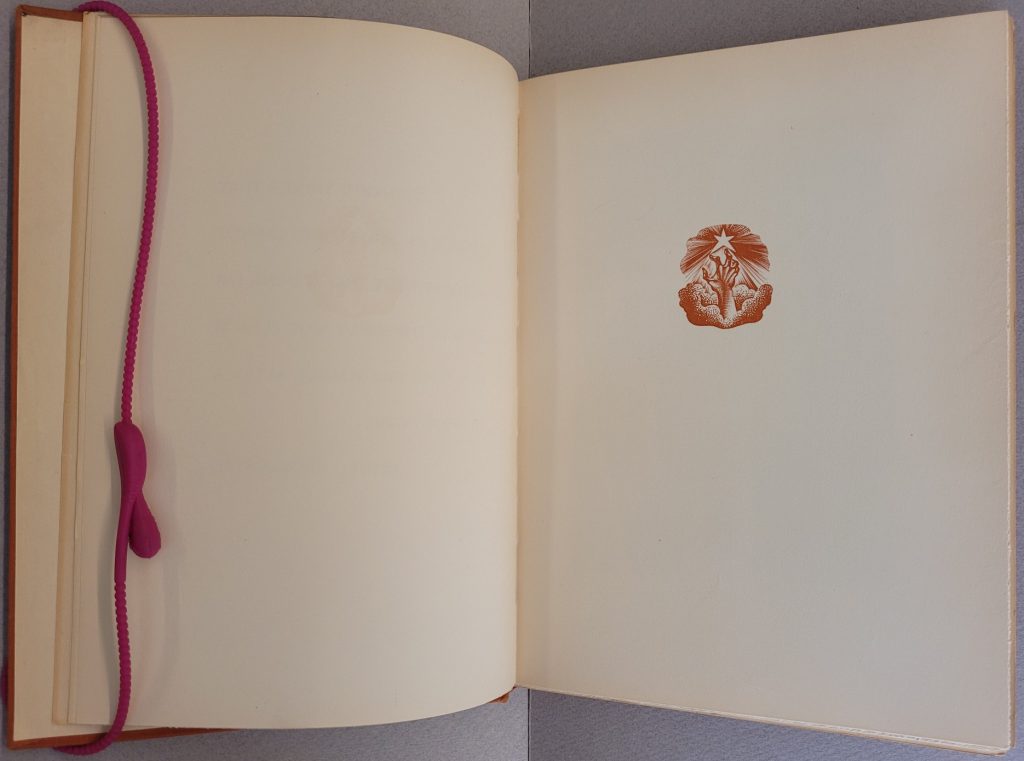
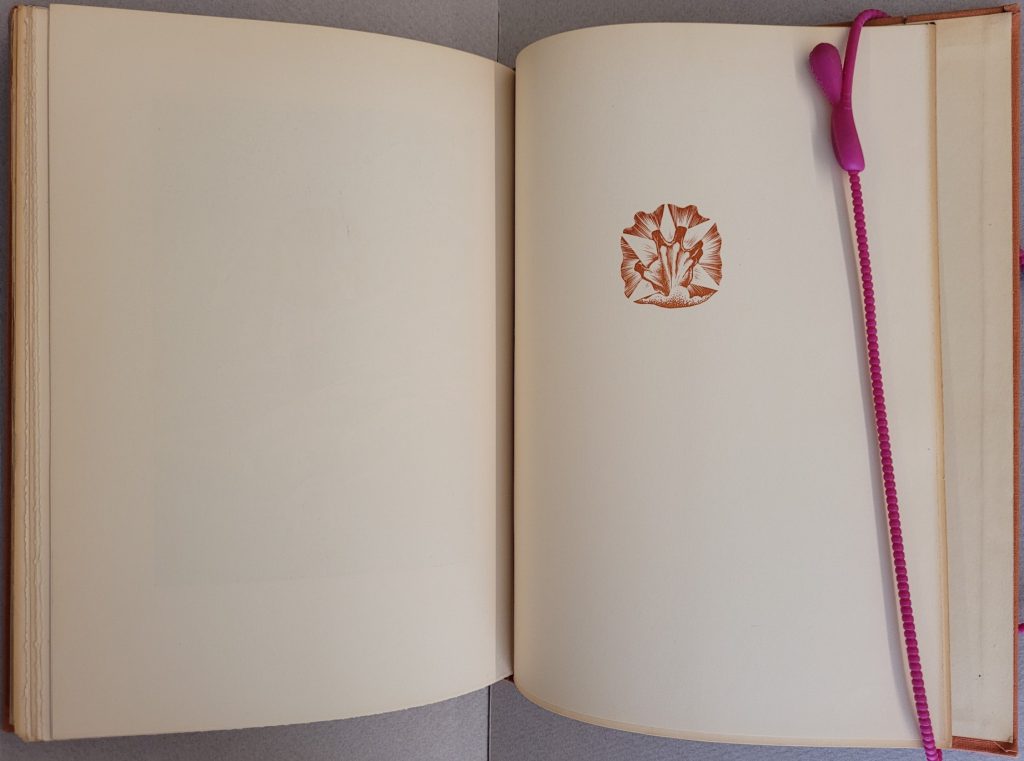
Ward uses the technique of printing the fantasy portions in orange and the rest in black.
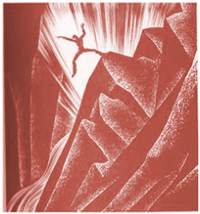
Proof copy – what is this??
Typically, before a book is printed, the publisher produces proofs for the author, the printer, etc to review and ensure there are no mistakes. The following was put up on Ebay by seller, vangard21. It is not a typical proof, but clearly it is not the final publication.

Pilgrimage, showing stitching holes on the spine.

wordless novel, Wild Pilgrimage. Each sheet has holes that
appear to be stitching, but the pages have all been pulled out.

of Lynd Ward’s wordless novel, Wild Pilgrimage.
Given how close the stitching holes are, it is hard to see how even 33 sheets could fit between the front and back. If anyone has an explanation for this, please get in touch with wn@worldessnovels.com. A credit line will be given for any information used.
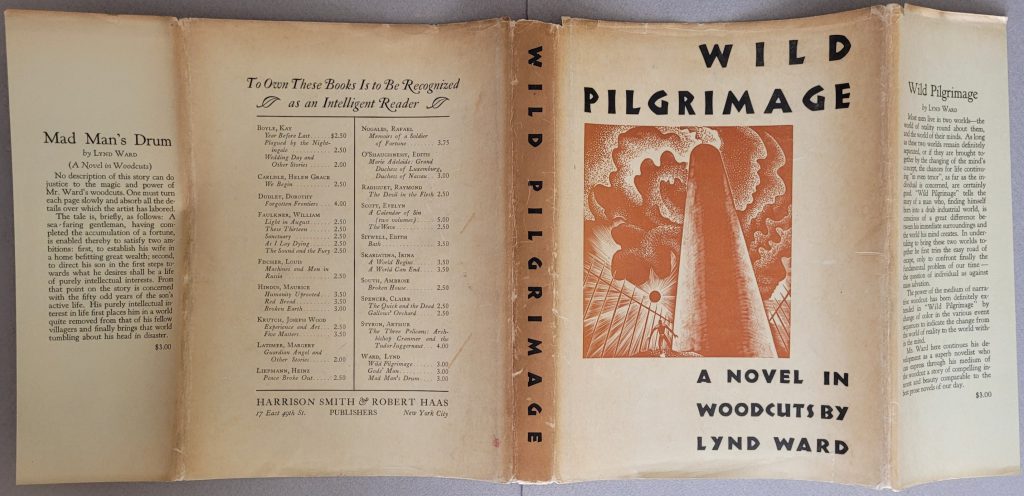
Trade Edition
There appears to be only one Trade edition, and it was done in the USA. Unlike the first two novels, there was no signed or limited edition.
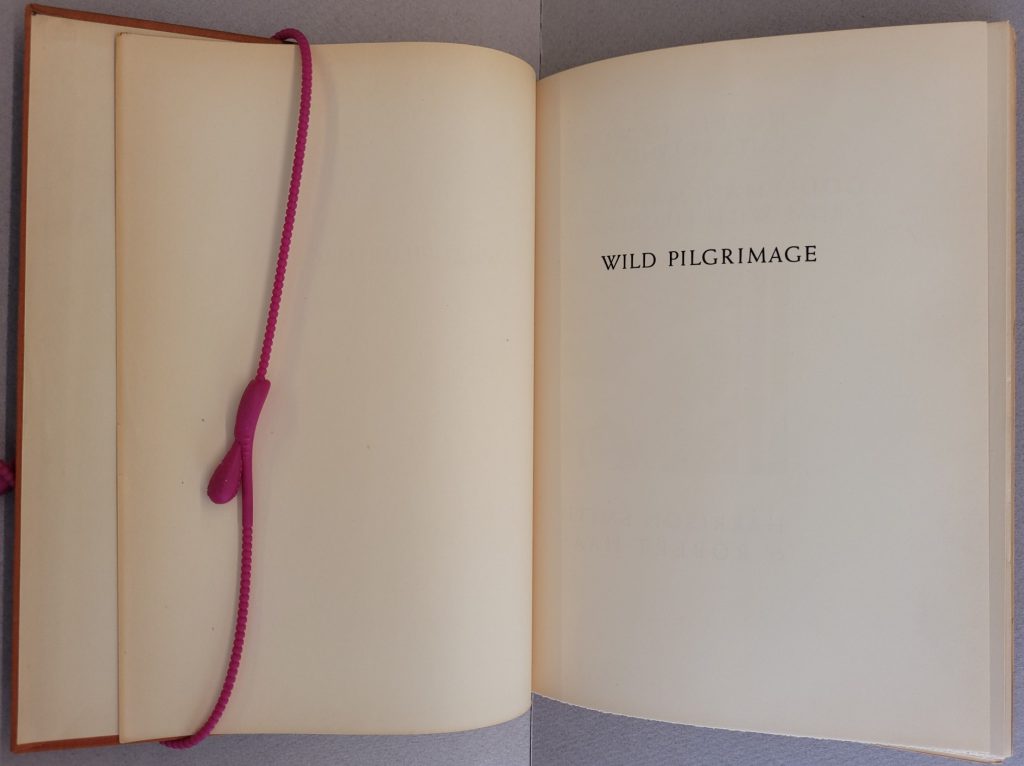
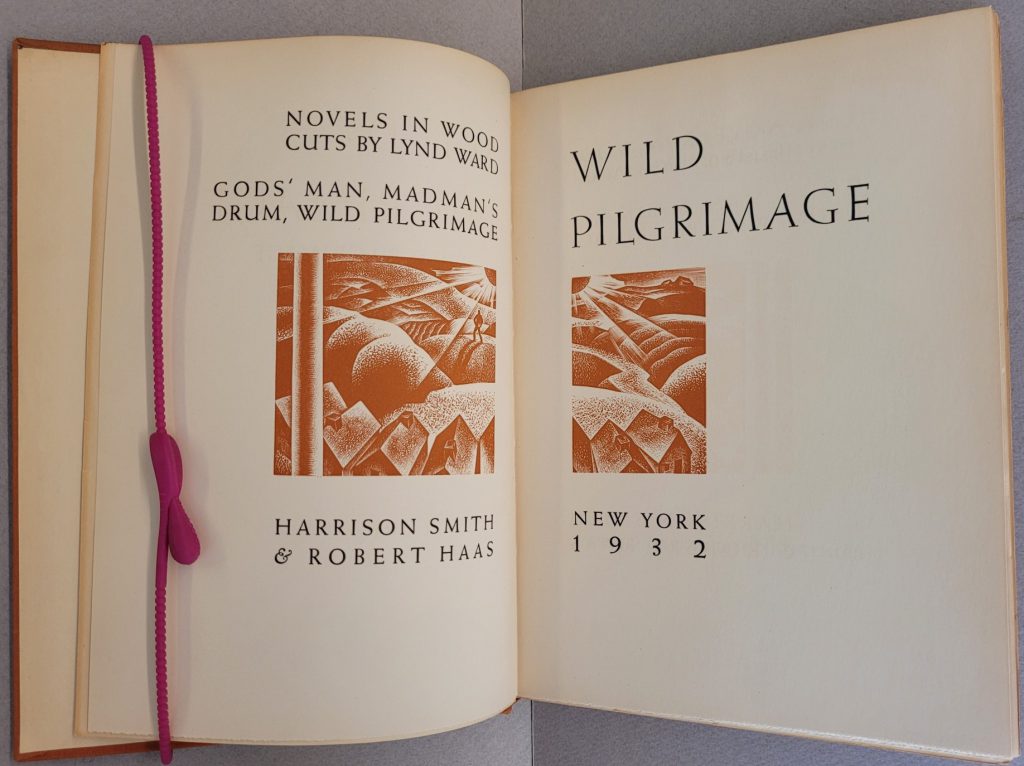
- Title: Wild Pilgrimage
- Author and Illustrator: Lynd Ward
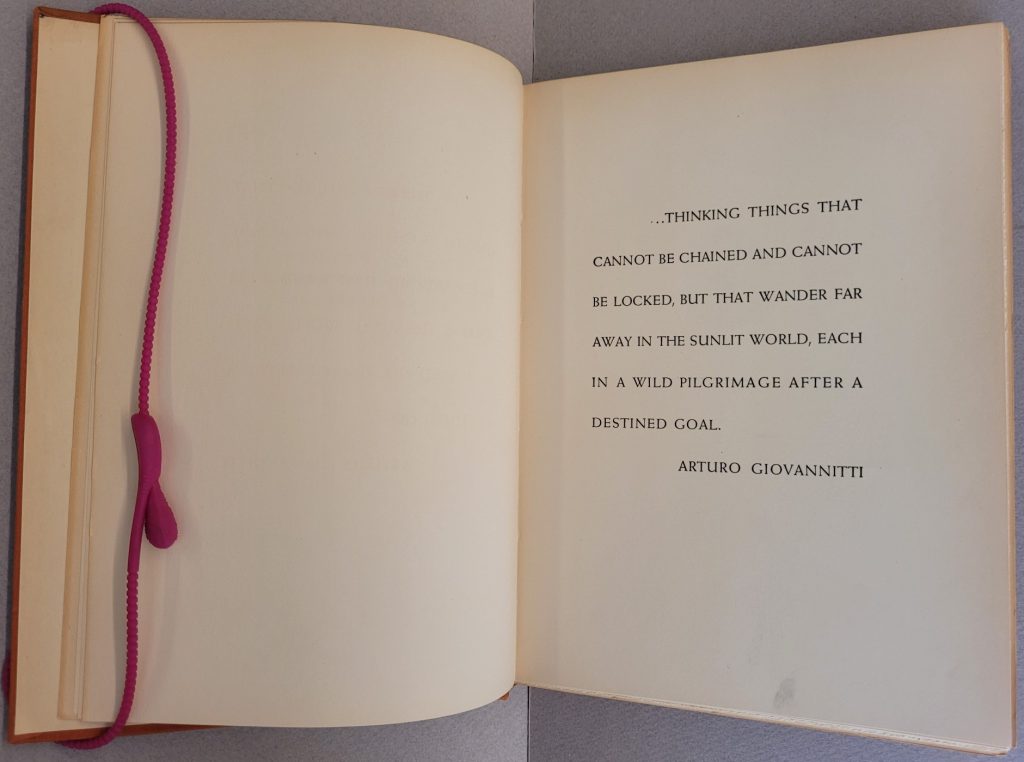
- Quotation at the front of the book: by Arturo Giovannitti (1884-1959), Italian-American union leader, political activist
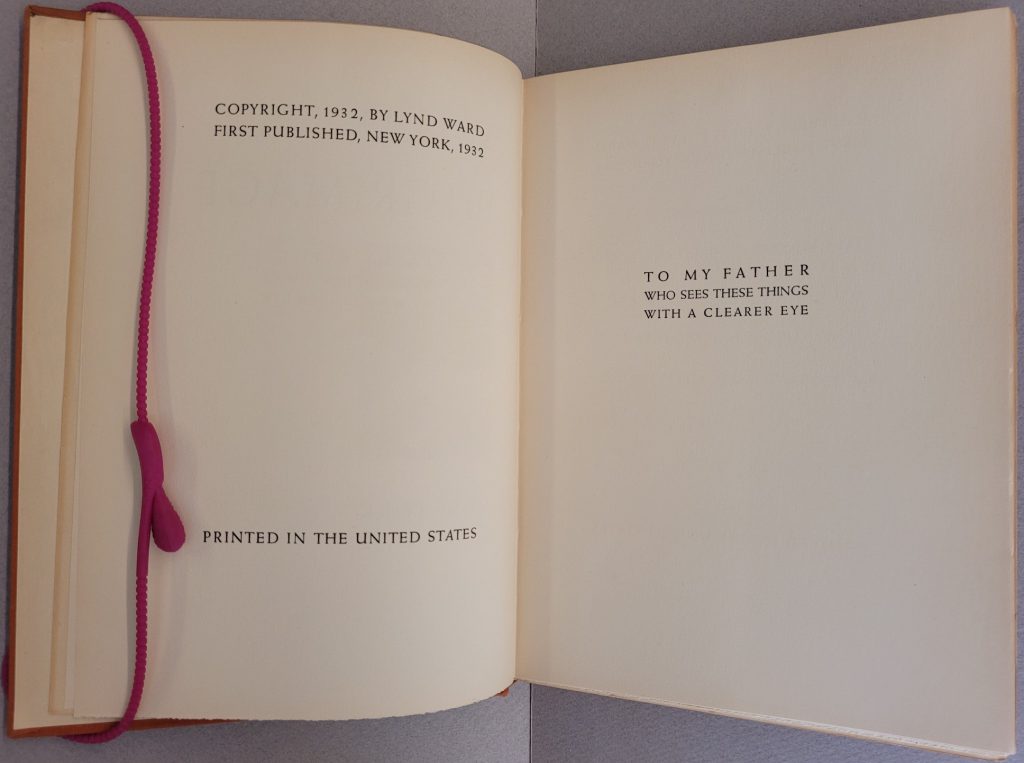
- Date of publication: 1932
- Publisher: Harrison Smith and Robert Haas
- Place of publication: New York
- Printer: ?
- Copyright: Artist?
- Dimensions: 25 x 18 x 2 cm
- Dust jacket: Yes- designed by the artist?
- slipcase: No
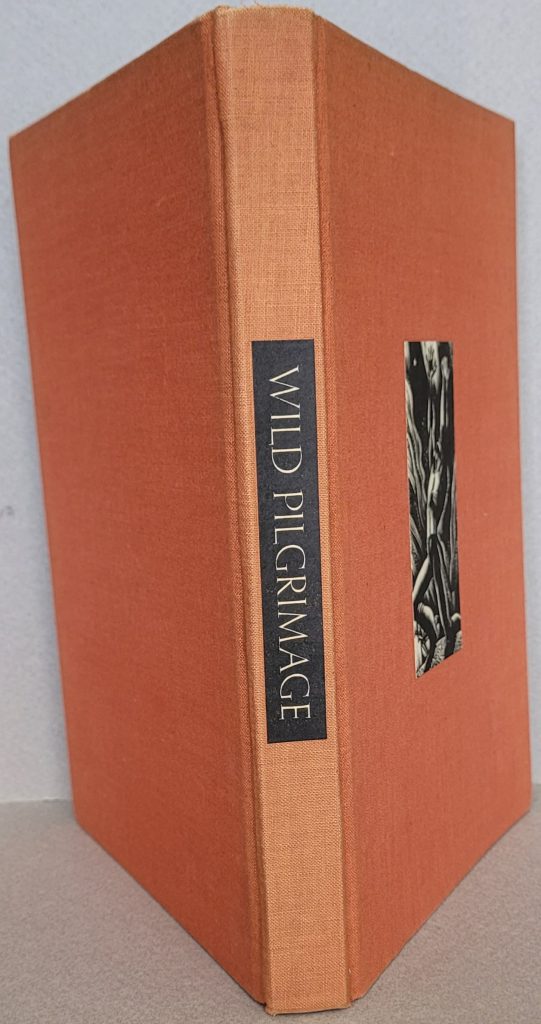
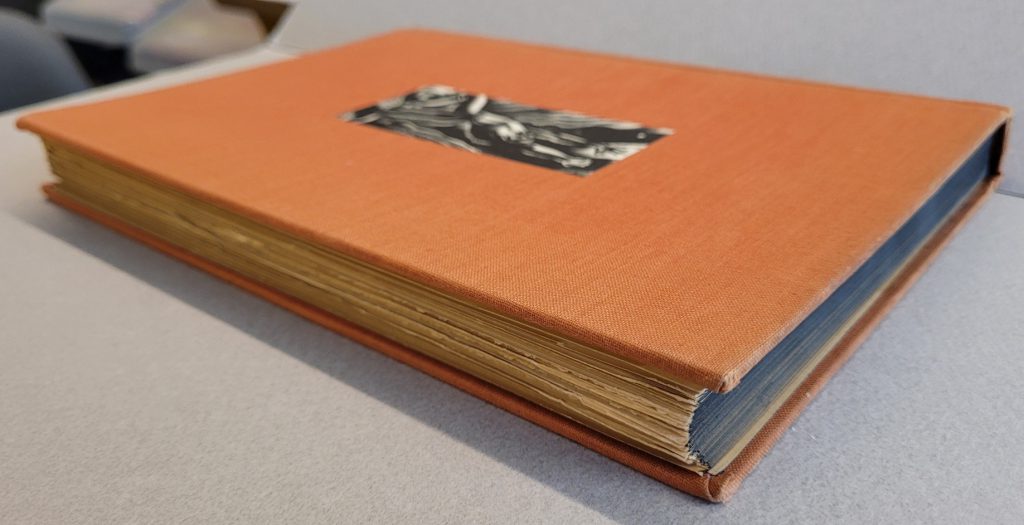
- Binding: hard cover
- Cover: cloth binding with paper label glued to the spine and small paper image glued to the front cover
- Language: English titles, etc
- Paginated: unpaginated
- Printed: recto
- Top Edge stained black, fore edge and bottom edges uncut.
- Edition: Trade only
- Printed from the original matrix: doubtful, I assume electroplates were made from the wooden blocks
- Description: 105 wood engravings; Ward used two colours; the story was told in black and white while the psychological inner workings of the protagonist were printed in orange (Patri in the late 1930s also used orange to portray his protagonist’s inner moods).
- Like the two earlier books, the Trade copy sold for $3.00.
COMMENTS
If you disagree with something on this page, have an improvement, or have a comment please contact me
wn at wordlessnovels.com
Any information used will be given a credit line.